
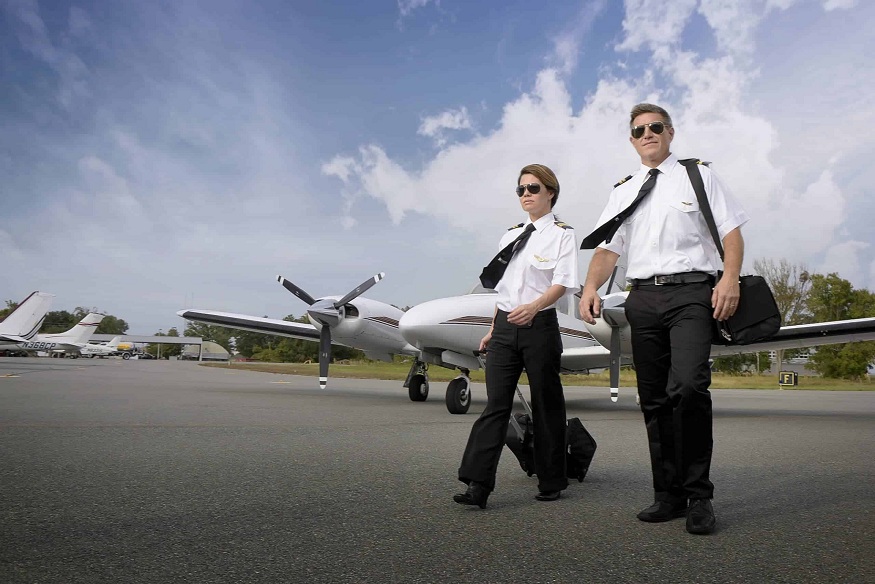
For decades, the path to becoming a pilot was defined by thick paper manuals, analog “steam gauges,” and the slow accumulation of hours in aging trainer aircraft. While the fundamental laws of physics remain unchanged, the environment in which students learn to navigate the skies has been radically overhauled. Modern Florida flight schools are no longer just places with a fleet of planes and a runway; they have become high-tech centers of innovation. By integrating sophisticated simulation, virtual reality, and data analytics, these institutions are producing pilots who are more prepared, more adaptable, and safer than ever before. The transformation of aviation education is not just about replacing old tools with new ones; it is about fundamentally changing how a student interacts with the aircraft and the sky.
Immersion Through Virtual and Augmented Reality
While full-motion simulators are effective, they are also expensive and take up significant space. To bridge the gap, flight schools are increasingly turning to Virtual Reality and Augmented Reality. VR headsets provide an immersive 360-degree view of a cockpit, allowing students to perform “chair flying”—practicing checklists and cockpit flows—with a level of realism that a flat poster or a tablet cannot match. By physically reaching out to touch virtual switches in a simulated space, students build muscle memory and spatial awareness long before they ever sit in a physical cockpit.
Augmented Reality takes this a step further by overlaying digital information onto the real world. During a pre-flight inspection, for example, a student might wear AR glasses that highlight specific components of the engine or display maintenance data directly over the parts they are checking. This ensures that the student is looking at the correct valves and wires, reducing the risk of a missed inspection item. These immersive technologies cater to a generation of digital natives, making the complex theoretical aspects of aviation more engaging and easier to retain.
The Rise of the Paperless Cockpit
The traditional pilot’s flight bag, once filled with several pounds of paper charts, logbooks, and manuals, has been replaced by a single tablet. The Electronic Flight Bag is now a standard tool in modern flight schools. These devices provide real-time GPS positioning, integrated weather overlays, and instant access to thousands of pages of documentation. For a student, this means less time spent fumbling with large paper maps and more time focused on flying the airplane.
The digital transition extends to the ground as well. Digital flight logs and school management software allow for seamless tracking of a student’s progress. Instructors can instantly see which maneuvers a student struggled with during their last lesson, and students can review GPS-tracked “ribbons” of their flight paths to see exactly where their turns were uncoordinated or their altitudes were inconsistent. This objective, data-driven feedback removes the guesswork from training and allows for a highly personalized curriculum that focuses on the specific needs of each individual learner.
Artificial Intelligence and Predictive Analytics
At the cutting edge of flight school technology is the integration of Artificial Intelligence. Some advanced training platforms now use AI to analyze a student’s performance data in real-time. By monitoring control inputs, reaction times, and even biometric data like heart rate, these systems can identify when a student is becoming overwhelmed or where they are consistently making errors. The AI can then suggest specific remedial exercises or adjust the difficulty of a simulator session to match the student’s current skill level.
Predictive analytics also play a crucial role in safety and maintenance. Flight schools can use data from their entire fleet to predict when a component is likely to fail before it actually does. This shift toward proactive maintenance ensures that aircraft are available when students need them and reduces the likelihood of an in-flight mechanical emergency. In the classroom, AI-powered tutors can answer student questions around the clock, providing instant explanations for complex aerodynamic principles or regulatory questions, ensuring that learning never stops when the instructor goes home.
Conclusion
Technology has moved the cockpit of a training aircraft closer to the highly automated flight decks of modern airliners. By embracing these advancements, flight schools are doing more than just saving time and money; they are cultivating a new breed of pilot who is comfortable navigating a data-rich environment. The transition from analog to digital has made pilot training more accessible, more efficient, and undeniably safer. As these technologies continue to evolve, the barrier between the virtual world and the real sky will continue to thin, providing aspiring aviators with the best possible foundation for a career in the clouds. The modern flight school is no longer just about learning to fly; it is about mastering the sophisticated systems that define the future of aviation.
